When Contemplation Becomes Comfortable - The Difference Between Sitting With Truth and Sitting With a Concept
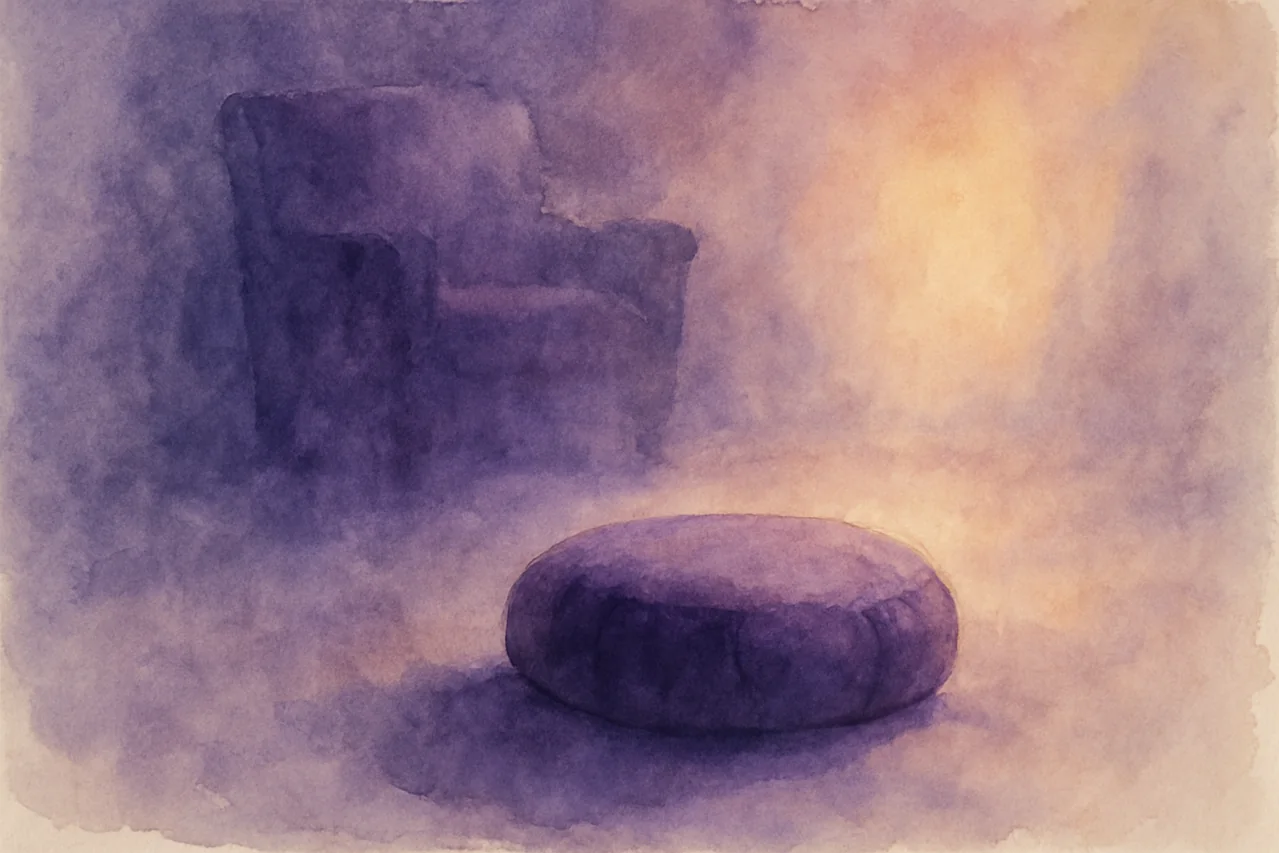
Comfortable contemplation decorates the self. Genuine contemplation dismantles it - and there is no comfortable stopping point on that road.
There is a soft allure to the promise of contemplation, a word that invokes a calm, serene kind of engagement with one's interior world. For many, this is the siren call of systems like Gene Keys and Human Design, where spirituality meets the intricate tapestry of one's unique self. People find comfort nestled within these frameworks, feeling seen and understood as they explore the contours of their personality, their innate gifts, and the shadows that obscure them. The contemplative practices offered by these systems promise a journey inward, where the complexity of life’s struggles might reveal some secret symmetry, some deeper purpose inscribed in the stars and in their very DNA.
The ache that draws sensitive souls to these systems is genuine. It is an ache to know oneself, to understand the patterns that seem to govern one’s life, and to transform suffering into something meaningful. These systems speak to a profound intuition - that there is something within us that is both broken and whole, something that longs to be seen and understood in all its complexity. The Gene Keys, with its poetic language and intricate design, offers a map, a way of navigating the labyrinth of the self with grace and intention.
Yet, this alluring map, for all its beauty, carries an inherent risk. The risk is not in the acknowledgement of one's shadow, but in the comfortable structures that such contemplation can provide. When contemplation becomes an exercise in fitting oneself into a narrative - a beautifully constructed one, to be sure - it ceases to dismantle the self and instead decorates it. It becomes a comfortable chair bespoke to one's desires and fears, offering a place of rest that is more illusion than liberation.
Genuine contemplation, as taught in the tradition of Advaita Vedanta and echoed by masters like Ramana Maharshi, is not an exercise in comfort. It is a radical inquiry that dismantles the very concept of a separate self. In the practice of self-inquiry, one traces the source of the "I," the sense of individual selfhood, back to its root, revealing its lack of inherent substance. This is not a path that promises ease or reassurance. It offers no map, no predetermined gifts or shadows, only the stark clarity of what is beyond the conceptual mind. This path demands that one sit with truth itself, not with a comforting representation of it.
The difference between sitting with truth and sitting with a concept lies in the willingness to allow one's deepest assumptions about self and world to be dismantled, rather than rearranged into a more pleasing pattern. Sitting with truth is a process of deconstruction, a relentless peeling away of layers until what remains is not a better version of the self, but the absence of self altogether. It is the discovery of the impersonal witness that observes all phenomena without attachment, revealing the underlying unity of all experience.
In the realm of comfortable contemplation, there is a stopping point - a place where one feels they have arrived, understood, and integrated their shadow and light. It offers a narrative of discovery that is deeply satisfying to the ego, which longs to be special, unique, and divinely orchestrated. But genuine contemplation offers no such resting point. It is an endless journey into the heart of awareness itself, where the stories of the self dissolve into the vastness of being.
This is not to dismiss the beauty or the appeal of systems like the Gene Keys. They speak to a part of us that longs for structure, for meaning, and they do so with an artistry that is both comforting and inspiring. Yet, in the deeper inquiry of nonduality, one is invited to let go of even these deeply cherished constructs, to see them as stepping stones rather than final destinations. The map is not the territory, and the contemplation of one’s hologenetic profile is not the same as the direct experience of nondual awareness.
The body, too, plays a crucial role in this journey. It is through the body that we can access the somatic truth of our existence, beyond the concepts and narratives we create. In genuine contemplation, the body becomes a vessel for direct experience, a place where the truth of being can be felt rather than thought. It is in the silent presence of the body that the dissolution of the separate self can occur, not as an idea but as a lived reality.
To contemplate genuinely is to embrace a kind of courage that is willing to face the void, the unknown, the ungraspable nature of reality. It is to risk everything for the sake of truth, to let go of all the comforting illusions that the mind weaves. It is a path that does not promise comfort or certainty, but instead offers the raw, unspeakable beauty of what is beyond the self.
In this way, the journey of contemplation is not about reaching a comfortable stopping point, but about continually stepping into the unknown, allowing oneself to be dismantled again and again. It is a deep, abiding trust in the truth of nonduality, where the separation between self and other, between seeker and sought, dissolves in the light of pure awareness.
This is the invitation of genuine contemplation - to sit with truth, not with a concept. To allow oneself to be unraveled, not by the seductive narratives of the mind, but by the simple, direct experience of what is. In this way, one finds not a decorated self, but the vast, luminous emptiness that is the true nature of all things. This is the path beyond comfort, beyond concept, into the heart of what is real.