Five Somatic Practices That Will Do More for Your Shadows Than Any Profile Reading
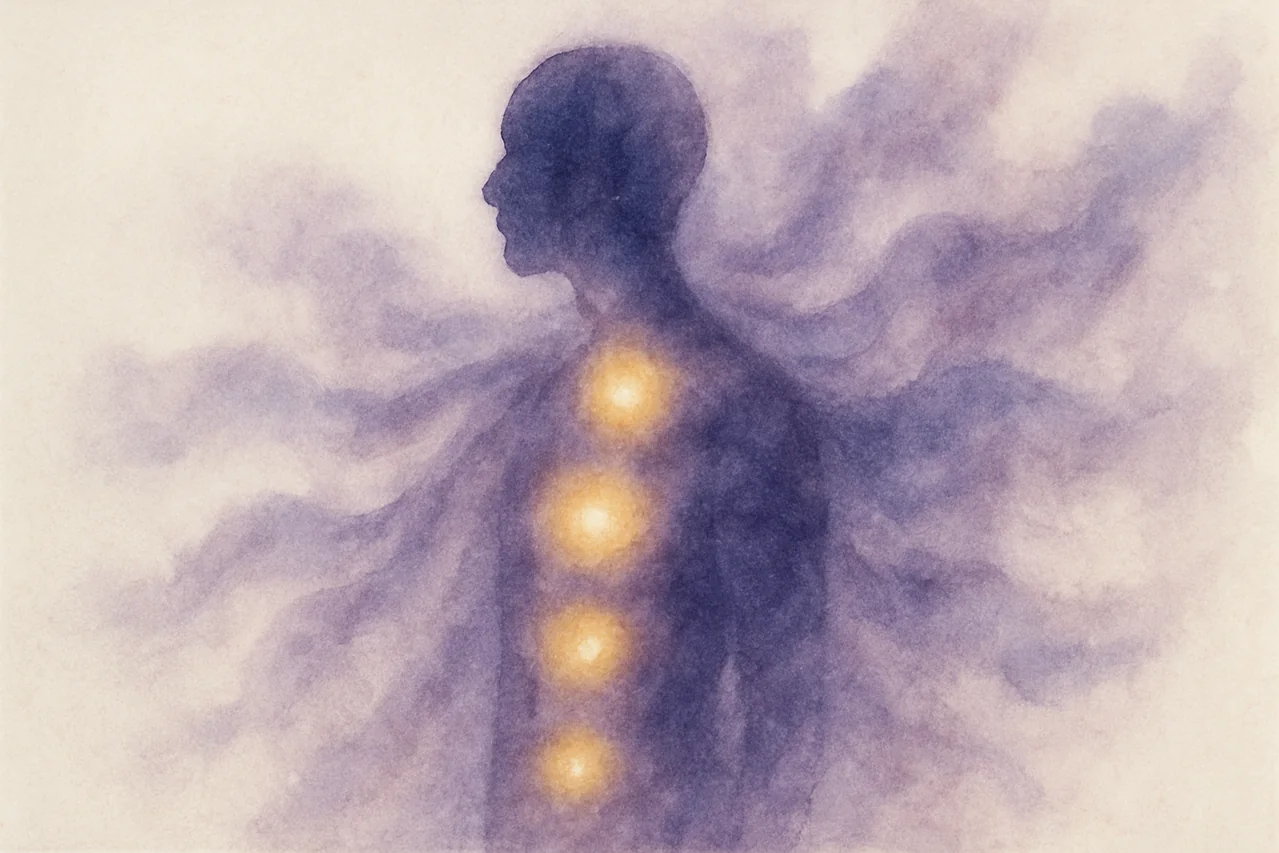
Shadows live in the body, not the profile. Five direct, demanding somatic practices that meet the shadow where it actually operates.
In a world increasingly fascinated by the intricate maps of self that systems like the Gene Keys and Human Design offer, there is a subtlety that often eludes us. It is the understanding that the narratives we weave about our shadows, however poetic and intricate, ultimately remain at the level of the mind. Shadows, those hidden aspects of our psyche that we seek to name and comprehend, do not reside in the airy realm of symbols and profiles. They are visceral, living entities that dwell in the body, in the tense tissues and the breath that catches in the throat. The true work of meeting our shadows - the kind of work that transforms rather than intellectualizes - demands a descent from the conceptual to the somatic.
Consider the ache that draws so many seekers to these systems. It is not merely an intellectual curiosity; it is a bodily longing for wholeness, an instinctual gravitation towards healing the dissonance that echoes through the nervous system. We carry the imprints of our shadows in the very cells of our being - in the way we hold ourselves, in the tension we accumulate, in the unconscious patterns of contraction that shape our posture. To touch the shadow with anything less than the full presence of our embodied awareness is to engage only superficially. The shadow is not a mere object to be studied from afar; it is a living force that calls for our engagement through direct, demanding somatic practices.
The allure of systems like the Gene Keys lies in their promise of individualized insight. They offer the comfort of a framework that claims to decode the intricacies of our suffering, proposing a narrative that entwines our personal struggles with cosmic patterns. Yet, as seductive as this narrative can be, it risks estranging us from the immediacy of our lived experience. The shadow, in its raw and often unruly form, cannot be neatly categorized or confined to the grid of a profile. It asks for a meeting that is intimate and unmediated, a confrontation with the discomfort that resides not in an abstract space but in the very fibers of our flesh.
To truly engage with our shadows, we must turn our attention inward, away from the allure of external systems and towards the direct experience of the body. This involves practices that do not simply observe the shadow but invite us to embody it, to feel its presence as a physical sensation, a tension, an energy. We must be willing to enter the territory of the body with courage and curiosity, recognizing it as the primary landscape where shadow work unfolds. It is here, in the warmth of our own skin, that healing begins.
Somatic practices such as breathwork, body scanning, and mindful movement invite us to inhabit our bodies more fully. They offer a gateway into the parts of ourselves that are often relegated to the unconscious - those aspects that ache for acknowledgment and integration. These practices demand a certain bravery, for they ask us to engage with the raw material of our experience without the safety net of intellectual abstraction. In doing so, they bring us into direct contact with the shadow's true habitat, allowing us to witness how it manifests and moves within us.
Breathwork, for instance, can open up pathways to deeper emotional truths stored in our bodies. Through intentional breathing, we can access layers of stored tension and unprocessed emotion, creating space for them to surface and dissolve. It is a visceral communion with the self, bypassing the filters of the mind to touch the heart of what is held within us. The breath becomes a bridge, connecting us to the aliveness of the shadow and its potential for transformation.
Body scanning, another potent practice, invites stillness and awareness into the body's landscape. By carefully attending to the sensations present in each part of the body, we cultivate a sensitivity to the subtle ways in which the shadow expresses itself. This practice reveals where we hold tension and resistance, offering clues to the patterns that bind us. It is a gentle yet profound way to cultivate presence, reminding us that true insight arises not from analysis but from direct observation.
Mindful movement, such as yoga or dance, brings an element of dynamism to shadow work. Through conscious movement, we can explore the relationship between our physical form and the energetic imprints of our shadows. Movement becomes a language through which we communicate with these parts of ourselves, uncovering their stories and releasing their hold. It is an invitation to embody freedom, to allow the body its natural expression and flow.
These somatic practices remind us of the simplicity and immediacy of the truth that Advaita Vedanta points towards - the dissolution of the separate self, the recognition of our intrinsic wholeness. They bypass the need for elaborate frameworks and instead encourage a direct inquiry into the nature of experience. In doing so, they dissolve the false division between mind and body, self and shadow. They reveal that the shadow is not an abstract concept to be decoded but a living reality to be embraced.
Ultimately, the greatest gift these practices offer is the opportunity to meet ourselves as we are, beyond the narratives we construct. They guide us into a space of profound stillness, where the shadow loses its charge and settles into the background of awareness. In this stillness, we discover that the shadow is not an enemy to be conquered but a misunderstood aspect of our own being, yearning for the light of our presence.
The journey of shadow work is not one of intellectual mastery but of embodied wisdom. It calls us to step away from the allure of profiles and into the truth of our own being. It invites us to trust in the intelligence of the body, to honor its capacity for healing and transformation. When we engage with the shadow through somatic practices, we do more than understand it - we integrate it, allowing its energy to inform and enrich our lives.
In this way, the shadow becomes not a burden to be borne but a source of profound insight and liberation. It is through the body that we come to realize our true nature, beyond any profile or system. For in the quiet, unassuming presence of our embodied awareness, the shadow finds its rightful place - not as something to be fixed or transcended, but as an integral part of the wholeness that we are.