Attachment vs. Love: How to Tell the Difference in Relationships
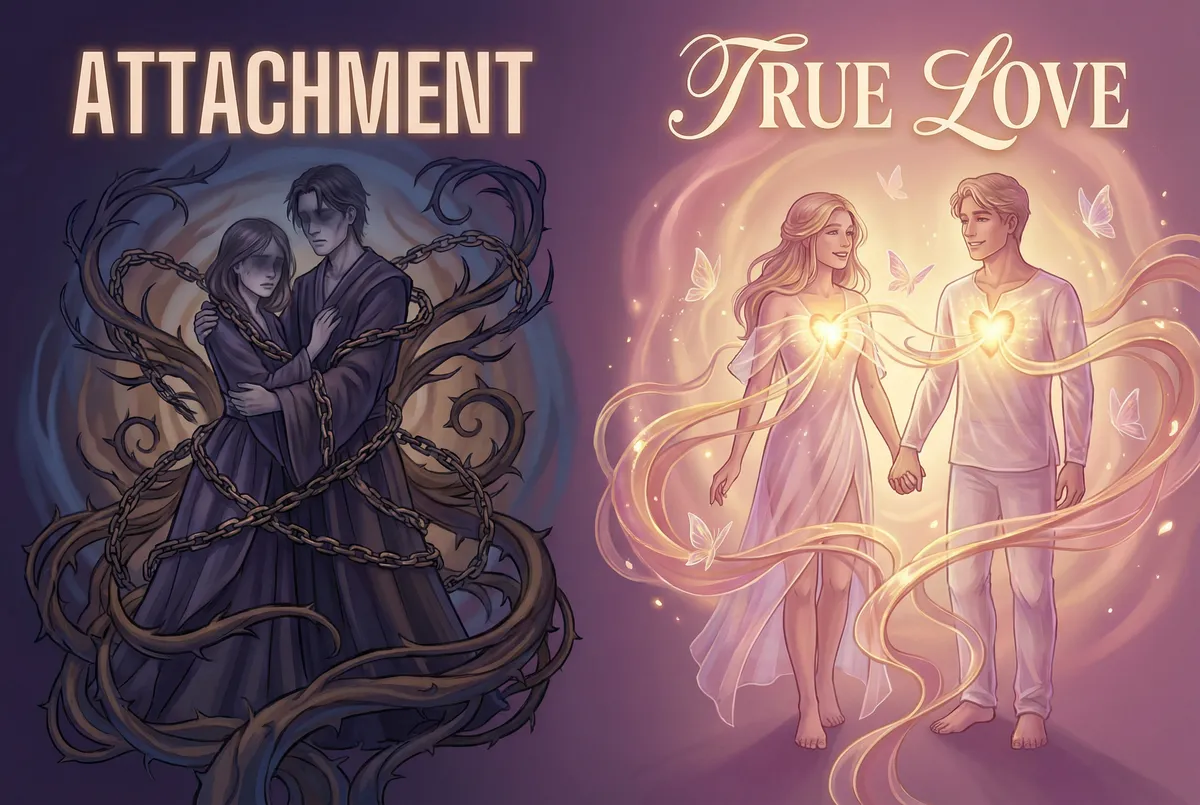
Is it love or just attachment? This is a question that many of us have asked ourselves at some point in our relationships. While the two can feel similar, they are at its core different. Understanding the difference between attachment and love is crucial for building healthy, lasting relationships. In this article, we'll explore the key distinctions between attachment and love, and help you determine which one is driving your relationship.
What Is Attachment? A Deeper Dive
Attachment, in a psychological sense, is the deep emotional bond that connects one person to another. It’s a fundamental human need, rooted in our earliest experiences with our caregivers. As infants, we form attachments to our parents or primary caregivers for survival. This initial bond shapes our “attachment style” and creates a blueprint for how we relate to others throughout our lives. It’s the invisible force that pulls us toward connection, seeking safety, comfort, and a sense of belonging.
“Attachment refers to how you relate to others. Your earliest bonds highly influence your relational style, including what you expect from people, how you interpret relationships, and how you behave in relationships.” - Psych Central
Think of your attachment style as your internal working model for relationships. It's a set of unconscious beliefs and expectations about how relationships work, based on your first experiences of being cared for. This model then guides your behavior in adult relationships, often without you even realizing it. The crazy part? Most of us are running on autopilot with relationship software we downloaded when we were three years old. Your nervous system learned what "safe" feels like before you could tie your shoes, and it's still using that same blueprint to evaluate every romantic partner you meet. When someone acts in a way that matches your early template of care... even if that care was anxious or inconsistent... your body reads it as "love" because it feels familiar. Think about that. We often mistake familiarity for compatibility, comfort for connection.
There are four primary attachment styles:
- Secure Attachment: If you have a secure attachment style, you likely had caregivers who were consistently responsive to your needs as a child. As an adult, you feel confident in your relationships, trust your partner, and are comfortable with both intimacy and independence. You see relationships as a safe harbor, a source of comfort and support, but you also have a strong sense of self and don’t rely on your partner for your sense of worth. You can communicate your needs openly and honestly, and you’re able to handle conflict constructively.
- Anxious-Preoccupied Attachment: If you have an anxious-preoccupied attachment style, your caregivers may have been inconsistent in their responsiveness. As a result, you crave closeness and intimacy but often feel insecure in your relationships. You might worry that your partner doesn’t love you as much as you love them, and you may be prone to jealousy and clinginess. You might find yourself constantly seeking reassurance from your partner, and you may have a hard time being alone.
- Dismissive-Avoidant Attachment: If you have a dismissive-avoidant attachment style, your caregivers may have been emotionally distant or dismissive of your needs. As an adult, you value your independence and self-sufficiency, often avoiding deep emotional connections to protect yourself from getting hurt. You might see relationships as messy and entangling, and you may prefer to keep your partners at arm’s length. You might have a hard time expressing your feelings, and you may shut down or withdraw when things get too emotional.
- Fearful-Avoidant (Disorganized) Attachment: If you have a fearful-avoidant attachment style, you may have experienced trauma or abuse in your childhood. As a result, you desire close relationships but also fear them. This creates a confusing mix of wanting and pushing away intimacy. You might find yourself in tumultuous, on-again, off-again relationships, and you may struggle with a deep sense of unworthiness.
While attachment is a natural and healthy part of relationships, it can become unhealthy when it's driven by fear, insecurity, or a need for control. This is often what we mean when we talk about "attachment" in a negative sense-a clingy, dependent, or possessive way of relating to a partner. It's when the need for security becomes so all-consuming that it stifles growth, freedom, and genuine connection. Think about it. You've probably seen this in action - maybe even in your own relationships. The constant checking of phones. The need to know where your partner is every second. The subtle (or not so subtle) attempts to control their choices, their friends, their time. This isn't love protecting itself; it's fear wearing love's mask. And here's the kicker: the tighter you grip, the more likely you are to squeeze the life out of what you're trying to hold onto. Know what I mean?
What Is Love? More Than a Feeling
Love, on the other hand, is a more expansive and complex emotion. It's a deep feeling of affection, care, and compassion for another person. While attachment is often about what you can get from a relationship (security, validation, a sense of self), love is about what you can give. I am not kidding. It's a selfless and unconditional expression of care for another person's well-being. Real love doesn't keep score. It doesn't demand reciprocity or performance metrics. When you love someone, you actually want them to be happy even if that happiness doesn't directly benefit you ~ even if it means they might outgrow you or choose a different path. That's fucking terrifying for most people, which is why we default to attachment so often. Love asks you to care about their dreams, their growth, their authentic self... not just the version of them that makes you feel good about yourself. Think about that.
The American Psychological Association defines love as a complex emotion involving "deep fondness, happiness in the beloved's presence, commitment to the other's well-being, and awareness of how words and actions affect the love object." But here's the thing - that clinical definition barely scratches the surface of what real love actually feels like when you're living it. True love has this quality of spaciousness to it, this sense that you can breathe around the other person. You're not constantly monitoring their mood or walking on eggshells. You genuinely want good things for them, even if those good things don't directly benefit you. That's the awareness part - you start seeing how your shit affects them, and you actually care enough to do something about it. Explore more in our spiritual awakening guide.
Rose quartz is the stone of unconditional love, keep one close when you are doing heart work. Look, I'm not saying you need crystals to figure out your relationship shit, but there's something about holding that soft pink stone when you're wrestling with whether what you feel is real love or just desperate clinging. Maybe it's placebo. Maybe it's not. But when you're sitting there trying to untangle the mess of your emotions, sometimes having something physical to anchor you helps cut through the mental noise and get to what's actually happening in your chest. Know what I mean?
Love is not about possession or control. It's about honoring and respecting your partner as a whole person, separate from yourself. It's about wanting what's best for them, even if it doesn't directly benefit you. Think about that for a second ~ when was the last time you genuinely wanted something for your partner that had nothing to do with making your own life easier or better? That's the real test right there. Love is a choice you make every day to show up for your partner with an open heart and a generous spirit. Not when you feel like it. Not when they've earned it. Every damn day, even when they're driving you nuts or you're stressed about work or life feels like it's falling apart. It's an action, a practice, a way of being in the world. And here's the thing ~ it gets easier with practice, but it never becomes automatic. You have to keep choosing it.
In my work as an intuitive reader, I've seen love in all its forms. I've seen the fierce, protective love of a parent for their child, the deep, abiding love of a long-married couple, and the earth-shaking, healing love that can emerge between two people who are committed to their own growth and to the growth of their relationship. But here's what gets me - real love doesn't demand. It doesn't clutch. When I sit with clients who are drowning in what they call "love," I can feel the difference in my bones. True love has this quality of spaciousness, like breathing room for the soul. It says "I want you to be free" even when that freedom scares the shit out of us. Love is the energy that connects us all, the force that heals all wounds, and the light that guides us home. And sometimes, love means letting go completely.
If anxiety is part of your journey, magnesium glycinate is one of the simplest things you can add. Look, I'm not saying it's some miracle cure or anything, but this particular form of magnesium actually crosses the blood-brain barrier and can take the edge off that constant buzzing feeling. The glycinate part matters ~ it's way easier on your stomach than the cheap stuff at the drugstore that just makes you shit your brains out. When you're already dealing with relationship anxiety and attachment patterns, the last thing you need is your supplements making you feel worse. Start with 200mg before bed and see how you feel after a week or two.
Years ago, I sat with a woman whose body was locked tight from years of clinging to a relationship that wasn’t love but desperate attachment. Her breath was shallow, her nervous system screaming for release. We worked through somatic exercises-shaking, deep breath cycles-and slowly, I watched the layers of survival dissolve. Attachment had been a cage, but when her body found freedom, her heart began to recognize what love actually felt like. I remember my own dark nights of the soul when my ego was unraveling piece by piece. Sitting in Amma’s darshan, I felt the pull of attachment-grip on identity, on old wounds, on wanting things to be a certain way. But the hug from her, firm and real, cracked open something raw and undeniable inside me. It wasn’t sentimental or sweet; it was a gut-level unbinding from the false self I’d been clutching for decades. That’s where love started distinguishing itself from mere attachment for me.Attachment vs. Love: The Key Differences
So, how can you tell the difference between attachment and love in your own relationships? Here are some key distinctions that'll cut right through the bullshit we tell ourselves about romance: When you're attached, you're basically clinging to someone because you need them to feel complete. That's not love ~ that's dependency wearing a pretty mask. Real love? It lets the other person be exactly who they are, flaws and all, without trying to change them or control the outcome. Attachment says "I can't live without you." Love says "I want to share this life with you." Big fucking difference, right? Paul explores this deeply in The Electric Rose.
| Attachment | Love | |
|---|---|---|
| Focus | Self-focused: “How does this person make me feel? What can I get from them?” | Other-focused: “How can I support and care for this person? What can I give to them?” |
| Motivation | Fear, insecurity, need for validation, a desire to fill a void within yourself. | Genuine care, compassion, a desire for connection, and a celebration of the other person’s being. |
| Behavior | Controlling, possessive, jealous, demanding, score-keeping, and a need for constant reassurance. | Trusting, supportive, respectful, generous, forgiving, and a celebration of each other’s freedom. |
| Emotional Experience | Anxiety, obsession, emotional highs and lows, a sense of desperation, and a fear of being alone. | Calm, peace, stability, deep joy, a sense of contentment, and a feeling of being at home. |
| Sense of Self | Your sense of self is dependent on the relationship. You feel lost without your partner. | You have a strong sense of self outside of the relationship. You are a whole person on your own. |
| Growth | Attachment often stifles growth, as the focus is on maintaining the status quo and avoiding change. | Love encourages growth, as both partners are committed to supporting each other’s evolution. |
Personal Experience Signals: Tuning In to Your Inner Wisdom
One of the most powerful ways to distinguish between attachment and love is to pay attention to your own inner experience. Trust me on this one. Your body, your emotions, and your intuition are constantly giving you feedback about the quality of your connection. It's like having an internal GPS that most of us have learned to ignore. Think about it ~ when you're truly loving someone, your chest opens. You breathe easier. There's this spaciousness inside you, even when things get messy. But attachment? That shit feels tight. Constricted. Like you're holding your breath and waiting for the other shoe to drop. Your nervous system knows the difference before your mind catches up, seriously. I've watched this play out in my own relationships and with clients for years now. The body doesn't lie about this stuff. Here are some personal experience signals to tune in to:
- How does your body feel when you’re with your partner? Do you feel relaxed, open, and at ease? Or do you feel tense, constricted, and on edge? Your body is a powerful barometer for the emotional climate of your relationship.
- What is the emotional tone of your relationship? Is it characterized by joy, laughter, and a sense of playfulness? Or is it heavy, serious, and fraught with drama?
- Do you feel free to be yourself in the relationship? Can you express your true thoughts and feelings without fear of judgment or rejection? Or do you feel like you have to walk on eggshells or hide parts of yourself to keep the peace?
- Do you feel energized or drained by the relationship? Does spending time with your partner leave you feeling uplifted and inspired? Or does it leave you feeling depleted and exhausted?
Take some time to sit with these questions. Journal about them. Meditate on them. Your inner wisdom knows the truth ~ it really does, even when your mind is screaming otherwise. The more you learn to listen to it, the more you'll be able to work through your relationships with clarity and grace. But here's the thing: that inner voice gets quieter when we're desperate or scared. So create some space. Get quiet. Maybe it's ten minutes in the morning before you check your phone, maybe it's a long walk without podcasts. I don't care how you do it, just do it. Because that voice ~ your actual intuition, not your fear talking ~ will tell you whether you're clinging or loving. Think about that. It already knows the difference between the two, even if your ego doesn't want to hear it.
A weighted blanket can feel like a hug from the universe, especially on nights when the mind will not stop. There's something about that gentle pressure that tells your nervous system it's okay to finally exhale. You know those nights. The ones where you're replaying every conversation from three years ago or planning imaginary arguments with your boss. Hell, sometimes you're writing acceptance speeches for awards you'll never win while your heart hammers at 2 AM. The weighted blanket doesn't judge your spiral. It just holds you. No conditions attached. It doesn't need you to be better tomorrow or different than you are right now. Think about that... when was the last time you felt held without having to perform or earn it? Most of us can't remember. We've been trading love for approval so long we forgot what unconditional feels like. But this stupid blanket gets it right every single time.
Which Is Right for You? Cultivating Secure Attachment and Deep Love
Ultimately, both attachment and love are essential for healthy, long-term relationships. A secure attachment provides the foundation of trust and safety that allows love to flourish. Without a healthy attachment, relationships can become a source of anxiety and insecurity. But without love, attachment can feel empty and transactional. Think about it this way: attachment is like the root system of a tree, and love is the fruit it bears. You can't have healthy fruit without strong roots, but roots alone don't make a tree worth having. I've seen couples who are securely attached but emotionally distant ~ they function well together but there's no spark, no genuine care. Stay with me here. On the flip side, I've watched relationships burn out because the love was intense but the attachment was chaotic. They'd swing between passion and panic, never finding that steady ground where both people feel truly safe to be themselves. The sweet spot? When your nervous system feels calm with someone AND your heart genuinely wants their happiness.
The key is to cultivate a secure attachment style and to choose a partner with whom you can share a deep and abiding love. This means working on your own emotional security, learning to communicate your needs and boundaries in a healthy way, and choosing a partner who is also committed to their own personal growth. But here's the thing ~ this isn't some weekend workshop bullshit. This is daily practice. Real work. You're literally rewiring decades of conditioning about what love looks like, what safety feels like, what you deserve. Most people think they can skip the self-work part and just find "the right person." Wrong. You bring your baggage to every relationship, period. The question is whether you're willing to unpack it or just keep cramming more shit in there. You might also find insight in The Invisible Tax of Emotional Labor - And Why You Are Go....
If you find yourself struggling with unhealthy attachment patterns, don't despair. It's possible to heal and develop a more secure attachment style. I've seen this shift happen countless times, and honestly? It's some of the most rewarding work you can do. The thing is, these patterns didn't form overnight, so don't expect them to vanish in a week. Be patient with yourself. Seriously. Here are some practical steps you can take: Start by noticing when you're operating from fear versus love. When you feel that familiar panic of "they're going to leave me" or "I need to control this," pause. Just pause. That awareness alone is huge. You might also find insight in The Power of Boundaries: Protecting Your Energy.
If you are ready to face what is hidden, a shadow work journal provides the structure many people need to go deep. Look, most of us need guardrails when we're digging into the messy stuff. Your mind will sabotage you. It'll distract you with Netflix or suddenly convince you that reorganizing your closet is urgent. A journal gives you prompts, questions that cut through the bullshit and keep you focused on what actually matters. Think about that ~ without structure, shadow work becomes navel-gazing or worse, a pity party. You need something that forces you to be honest about the patterns you keep repeating in relationships.
- Get to know your attachment style. The first step is to understand your own attachment patterns. There are many great books and online resources that can help you identify your attachment style and understand how it’s impacting your relationships.
- Heal your inner child. Our attachment styles are rooted in our childhood experiences. Healing the wounds of your inner child can help you break free from old patterns and create a more secure internal foundation.
- Practice self-compassion. Beating yourself up for your attachment patterns will only keep you stuck. Instead, practice treating yourself with the same kindness and understanding that you would offer to a good friend.
- Learn to communicate effectively. Healthy communication is the lifeblood of any good relationship. Learning to express your needs and boundaries in a clear and respectful way can transform your relationships.
- Seek professional support. Therapy can be an invaluable tool for healing attachment wounds and developing a more secure attachment style. A good therapist can provide you with the support, guidance, and tools you need to create the loving, supportive relationship you deserve.
If you're ready to explore these patterns in your own life and relationships, I invite you to book an intuitive reading with me. Look, I get it ~ this shit is hard to see clearly when you're in the middle of it. Together, we can uncover the root of your attachment style and create a path toward more love, freedom, and joy. Sometimes you need someone outside your emotional tornado to help you see what's actually happening versus what your wounded parts are telling you is happening. You don't have to work through this journey alone, and honestly, trying to figure this out solo usually just keeps you spinning in the same patterns. If this connects, consider an deep healing session. Because real change happens when you stop analyzing and start feeling into what's actually true.