New Boundaries From Clear Ground
New Boundaries From Clear Ground
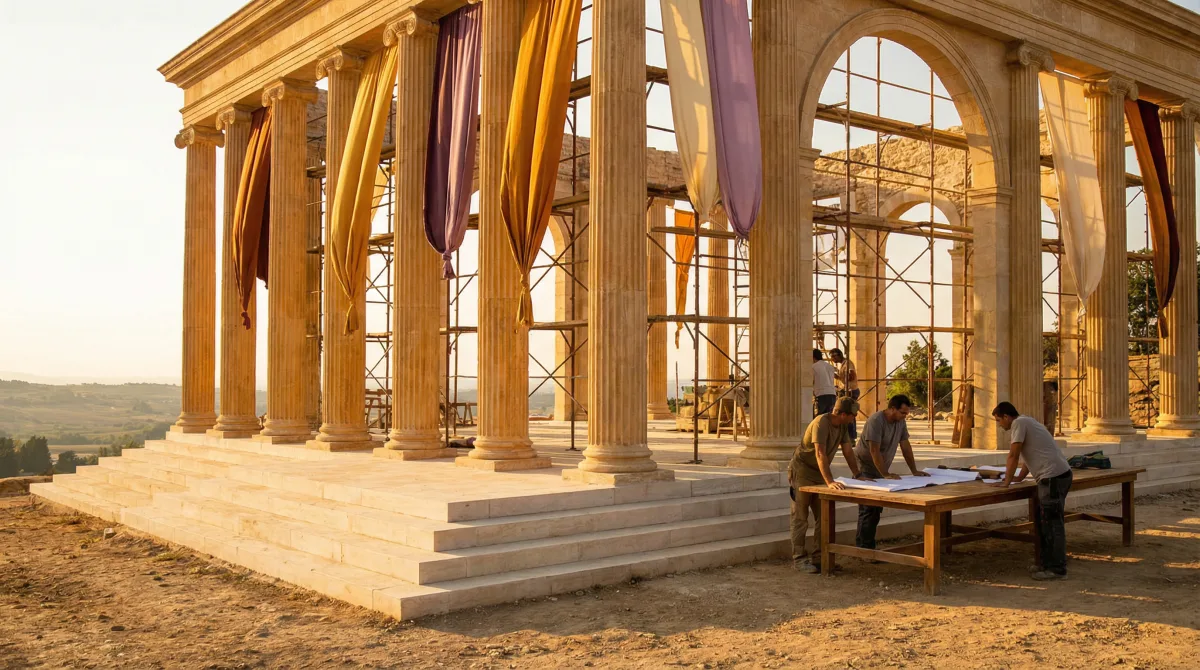
Set a clear-ground boundary by naming what you will and will not allow, then choosing how you will respond without shutting out all connection. Boundaries set from woundedness are walls. Boundaries set from wholeness are architecture. After the forgiveness work clears the ground, you finally build from sovereignty instead of survival.
You do not have to finish healing or forgiveness before saying no. If someone is harming you, protection comes first. Clear ground is a direction for practice, not a test you must pass before you deserve a boundary.
Before you did the deep work - before the forensic processing, before the three rounds, before the release - every boundary you set was constructed from survival material. Fear. Reactivity. Hypervigilance. The desperate need to never be hurt that way again.
Those boundaries served you. They kept you alive. But they were walls, not architecture. They kept everything out, including the things you actually wanted in.
The Difference
Boundaries from woundedness sound like: "I will never let anyone get close enough to hurt me again." This is a wall. It protects you from harm AND from connection, love, and intimacy.
Boundaries from wholeness sound like: "I know exactly what I will and won't allow in my space. I can be open and protected simultaneously." This is architecture. It has doors that open and close. It has windows.
Wound-boundaries are reactive - they activate when you're triggered and collapse when you're lonely. Clear-ground boundaries are proactive - they exist before the threat arrives and don't require triggering to activate.
What Clear-Ground Boundaries Look Like
You can say no without guilt, without justification, without anxiety. Just no. You can be vulnerable without losing yourself. You can end things cleanly - not with drama, just complete. You can receive criticism without collapsing or defending.
I remember sitting in Amma’s darshan hall, my body trembling with the aftershocks of a long-held grief finally loosening. It wasn’t some airy spiritual moment. It was raw muscle memory releasing its grip, breath catching, tears burning the skin of my face. That day, the boundary I’d set between my heart and the world began to soften-not because I got enlightened, but because my body said enough.
In my practice, I’ve had clients who come in armored like they’re expecting battle, every nerve wired tight with past betrayals. I guide them through breath work and shaking, and sometimes, that nervous system unraveling is the only way they can rebuild a boundary that’s a door, not a wall. It’s messy, sweaty, and damn uncomfortable. But in those moments, you don’t just talk about moving on-you physically feel yourself letting go.
What we're looking at is what becomes available after the deep work. Not better walls. Better architecture. Not stronger defenses. Clearer sovereignty.
Om Dum Durgayei Namaha
Forensic Forgiveness maps the transition from wound-boundaries to clear-ground boundaries in detail.
The Body as the Boundary Keeper
In my 35 years of walking this path, and sitting with countless clients, I've learned one undeniable truth: the body keeps the score, and it also keeps the boundaries. Before you had the language, before you had the cognitive framework for what was and wasn't okay, your body knew. That clench in your gut, the tightening in your throat, the sudden urge to flee - that's your somatic intelligence screaming 'No.' When we're operating from woundedness, we learn to ignore those signals. We override them with shoulds and have-tos. The work of clearing the ground, the deep excavation of Forensic Forgiveness, is about returning to that primal knowing. It's about recalibrating your nervous system to trust its own signals again. A clear-ground boundary isn't just a mental construct; it's a felt sense. It lives in your bones, in your breath. It's the calm, solid presence of your own sovereign energy field, a field that doesn't need to shout because its very existence is a clear statement of what is welcome and what is not.
Boundary work does not require a supplement. This is a personal recollection, not a recommendation or a promise about anyone else's health:
I started taking magnesium glycinate before bed and within a week, I stopped grinding my teeth. My shoulders dropped. Know what I mean? It's like someone turned down the volume on that anxious chatter that runs in the background of everything.
The Role of Dharma in Boundary Setting
Vedanta offers us the concept of Svadharma, one's own unique purpose or duty. When your boundaries are a mess, it's often because you're tangled up in everyone else's dharma. You're trying to be the peacemaker, the good daughter, the supportive friend, the perfect employee, and you've completely lost the thread of your own sacred obligation. Bear with me. Setting boundaries from wholeness is an act of fierce devotion to your own dharma. It's saying, 'My primary responsibility is to this soul's journey, to the expression of this unique slice of the divine.' This isn't selfish; it's the most generous thing you can do. When you are firmly rooted in your own dharma, you stop leaking energy into roles and relationships that drain you. You offer the world the gift of your full, undiluted presence, rather than the resentful dregs of your depleted energy. A boundary from this place isn't a rejection of the other person; it's an affirmation of your own divine assignment. The Sovereignty & Boundaries collection offers further reading on holding your own ground when family roles and other people's expectations pull you away from it.
Architecture of the Soul: Beyond Just Saying No
We think of boundaries as simply saying 'no,' but the architecture of a sovereign self is so much more subtle. It's also about the 'yes.' What are you saying a wholehearted, full-bodied 'yes' to? When you build from clear ground, you're not just erecting fences; you're designing a sacred temple for your own soul. This temple has gates that swing open for what nourishes you, and bolt shut for what depletes you. It has windows to let in the light of connection, but they have latches for when you need solitude. It has a foundation so deep it's unshakable by the storms of others' opinions or emotional states. I often guide my clients to visualize this architecture. What does your temple look like? What is it made of? Who holds the keys? This isn't just a metaphor; it's a potent practice of energetic embodiment. You are not just a person with boundaries; you are the living architecture of your own wholeness.
Practice: Give One Door a Clear Hinge
Choose one ordinary request, not your most painful relationship. Use the temple image to give your boundary both a clear limit and an honest opening.
- Notice what happens in your gut, throat and breath when you imagine saying yes. Name the sensation without forcing it to change.
- Write two short lines: "What I will not allow is..." and "What I genuinely welcome is..." Let your own dharma, not the good-daughter or peacemaker role, guide the answer.
- Turn those lines into one usable boundary. For example: "I am not available for a late-night call. I can speak tomorrow afternoon." You do not owe an alternative you do not want to offer.
- Name the action you control if the limit is ignored, such as ending the call. Rehearse the sentence once without adding a defense of your worth.
You can keep a door closed where contact is unsafe. This practice is not a demand to be vulnerable or to make your no feel effortless.
The Energetics of 'No'
A 'no' from a place of woundedness is a shield. It's heavy, defensive, and it drains your energy to hold it up. A 'no' from a place of wholeness is a sword. It's light, precise, and it cuts through the bullshit with effortless grace. For 35 years, I've watched people struggle with the weight of their boundaries. They say 'no' and then spend the next three days feeling guilty, anxious, and exhausted. That's because their 'no' is coming from a place of fear, not a place of power. When you've done the work to clear the ground, your 'no' becomes a clean, energetic statement of your sovereignty. It doesn't require an explanation. It doesn't require an apology. It's a simple, powerful declaration of what is and is not acceptable in your reality.
From Guarded to Guided
The old boundaries were about keeping you safe. The new boundaries are about keeping you true. When you're operating from a place of woundedness, your boundaries are designed to protect you from getting hurt again. You're guarded. You're defensive. And I mean that. You're closed. But when you're operating from a place of wholeness, your boundaries are guided by your intuition. You're not trying to keep the world out; you're inviting in what's aligned with your soul's purpose. When I sit with clients, we work on shifting from a guarded to a guided state. It's a process of learning to trust your inner guidance system, the part of you that knows, with absolute certainty, what is and is not for you.
If the forgiveness work beneath your boundary still feels unfinished, read The Alchemy of Completion: What Real Forgiveness Feels Like for the distinction between forcing yourself to let go and allowing honest feeling. It continues the inner work without making renewed contact a requirement.
Questions About This Article
What are clear-ground boundaries?
They are limits rooted in self-respect and sovereignty rather than only in the fear of being hurt again. The article describes them as architecture: doors can open for what nourishes you and close when you need protection.
Do I have to finish forgiveness work before setting a boundary?
No. Protection comes first, and you can say no while healing and forgiveness are still unfinished. Clear ground is a direction for practice, not a condition you must meet before you deserve a boundary.
How can I protect myself without building a wall against connection?
Name what you will not allow and what you genuinely welcome. A boundary can protect a specific limit while leaving room for chosen connection. You can also keep a door closed where contact is unsafe.
How does dharma help with boundary setting?
The article uses Svadharma, your own purpose or duty, to distinguish a sacred responsibility from roles such as peacemaker or good daughter. A boundary can affirm your own path rather than serve everyone else at your expense.
What is one way to practice a clear-ground boundary?
Choose an ordinary request, notice your gut, throat and breath, then write what you will not allow and what you welcome. Turn that into a short boundary sentence and identify an action you control if the limit is ignored. An alternative is optional, not something you owe.