Muslim Prayers for Healing: The Sacred Words That Mend the Soul
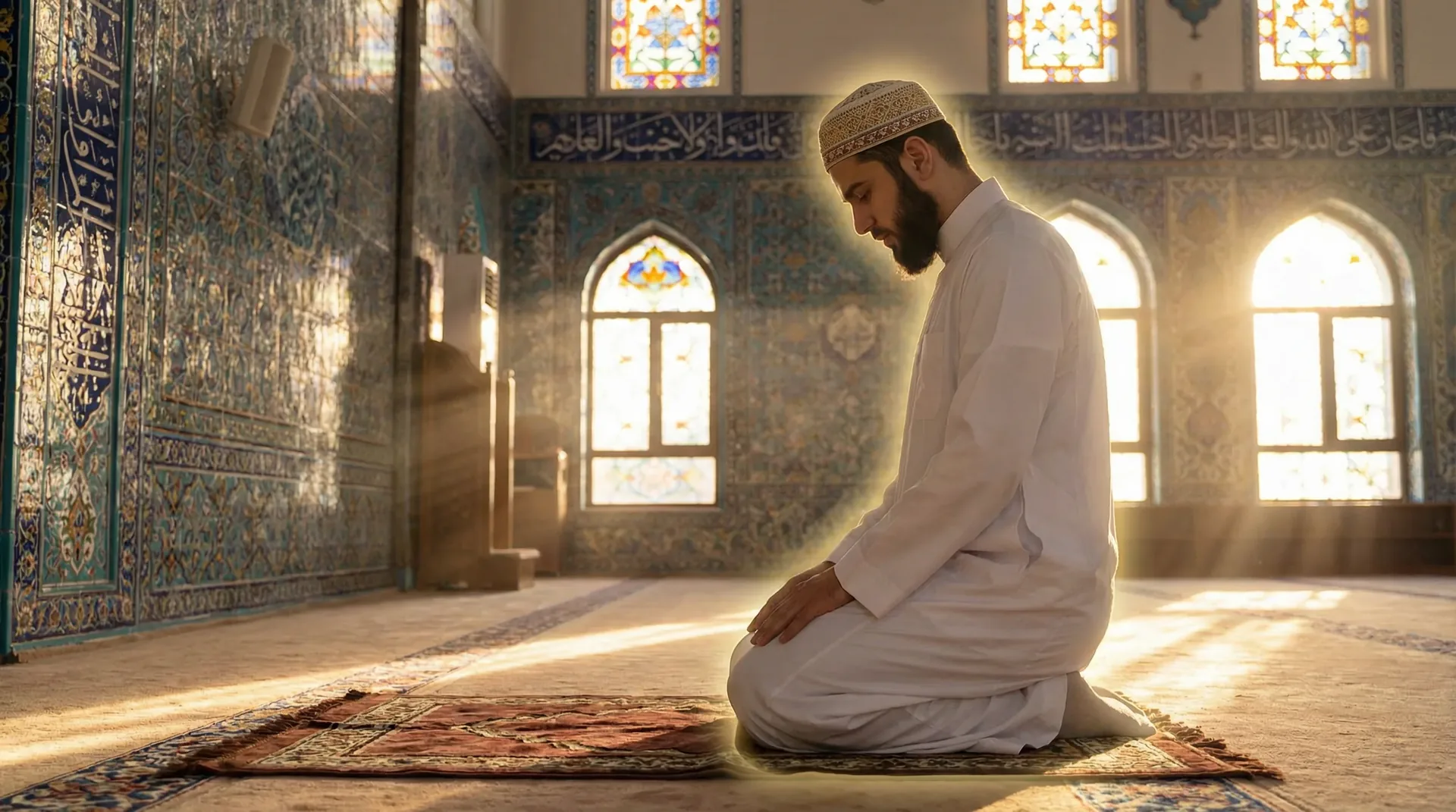
There is a tradition within Islam that most Westerners never encounter - a living river of healing prayer that has been flowing for fourteen centuries, carrying the wounded and the weary toward something whole.
A beautiful altar cloth transforms any surface into sacred ground.
Al-Fatiha is the first chapter of the Quran, and it is recited in every prayer, every day, by over a billion people. It is considered the greatest healing prayer in Islam. The Prophet Muhammad said that Al-Fatiha contains the cure for every disease. "All praise belongs to God, Lord of all the worlds. The Most Compassionate, the Most Merciful. Master of the Day of Judgment. You alone we worship, and You alone we ask for help. Guide us on the straight path - the path of those who have received Your grace, not the path of those who have earned anger, nor of those who have gone astray." What makes this prayer so powerful for healing? It moves through a complete spiritual arc in seven verses: recognition of the Divine, surrender of ego, acknowledgment of mercy, and a direct request for guidance. It is a miniature pilgrimage from isolation to connection. Ayat al-Kursi: The Verse of the Throne the single most recited verse for spiritual protection in the Islamic world. Mothers whisper it over sleeping children. Travelers recite it before journeys. The sick hold it in their hearts like a shield. "God - there is no deity except Him, the Ever-Living, the Self-Sustaining. Neither drowsiness overtakes Him nor sleep. To Him belongs whatever is in the heavens and whatever is on the earth. Who is it that can intercede with Him except by His permission? He knows what is before them and what will be after them, and they encompass not a thing of His knowledge except for what He wills. His Throne extends over the heavens and the earth, and their preservation tires Him not. And He is the Most High, the Most Great." I remember sitting with a woman in Denver who was shaking so hard it felt like her bones might splinter. I guided her breath, slow and deliberate, because the nervous system doesn’t just heal through talk. It needs rhythm, movement, and surrender. Those Islamic prayers carry that same pulse - a steady current that’s both fierce and soft, pulling you out of the chaos and into something steadier. I’ve been through my own dark nights when words failed me, when ego deaths shattered every story I told myself. Amma’s hugs were a lifeline, but it was the deep, steady breath beneath those moments that actually mended the ragged edges inside. Healing isn’t some pretty concept. It’s the body unclenching, the heart loosening, the soul whispering through a breath no one else can hear.Rose quartz is the stone of unconditional love, keep one close when you are doing heart work.
The power of this verse lies in its absolute declaration: there is a Consciousness that never sleeps, never tires, never forgets you. When you are sick, when you are afraid, when the night feels endless - something is awake with you. Something vast is holding the whole thing together, and it is not tired. The Healing Duas: Personal Prayers from the Prophet Beyond the Quranic verses, there are specific prayers (duas) that the Prophet Muhammad taught for healing. These are intimate, conversational prayers - not liturgy, but relationship. "O God, Lord of the people, remove the suffering. Heal, for You are the Healer. There is no healing but Your healing, a healing that leaves no sickness behind." This prayer is impressive in its simplicity. It does not bargain. It does not explain why healing is deserved. It simply names what is true: that healing belongs to God, and that real healing is complete - it leaves nothing broken behind. Another healing prayer: "I seek refuge in God's perfect words from every evil that has been created." recited for protection from illness, from spiritual harm, from the unnamed anxieties that settle in the body like fog.There is something about a sandalwood mala that carries the energy of thousands of years of devotion. The wood itself seems to remember every prayer whispered over it, every meditation session where someone sat in the dark trying to find their way back to peace. You can feel it the moment you touch those smooth beads ~ this isn't just carved wood, it's a living connection to something bigger. Know what I mean? It's like holding history in your hands, all those desperate midnight prayers and quiet morning gratitudes soaked right into the grain.
Ruqyah: The Practice of Healing Recitation In Islamic tradition, Ruqyah is the practice of reciting specific Quranic verses and prayers over someone who is ill - physically, emotionally, or spiritually. It is not magic. It is not superstition. It is the belief that sacred words carry a vibration that can realign what has become disordered. The practice typically involves reciting Al-Fatiha, Ayat al-Kursi, and the last three chapters of the Quran (Al-Ikhlas, Al-Falaq, and An-Nas) while placing a hand on the area of pain or over the heart. The reciter breathes gently after each verse, allowing the breath to carry the words into the body. I have witnessed this practice performed by a Sufi sheikh in Morocco, and I can tell you - whatever your beliefs about the mechanism - the room changed. The air thickened with something. The person being prayed over wept, not from sadness but from the sudden, overwhelming experience of being held by something they could not see. The Names of God as Medicine In Sufi tradition, the 99 Names of God are used as specific medicines for specific conditions. Here's the thing: it's a sophisticated spiritual pharmacology that has been practiced for over a thousand years.Pema Chodron's When Things Fall Apart is the book I give to anyone going through a dark night. I've probably bought twenty copies over the years. Given them to friends divorcing, people losing jobs, anyone whose world just cracked open. Hell, I keep extras on my shelf because I know someone's always going to need one. Chodron doesn't bullshit you with false comfort or tell you everything happens for a reason. She sits with you in the mess. Shows you how to stop running from the pain and actually learn something from it. Know what I mean? She's not selling you some spiritual bypass where you pretend suffering is just an illusion. No ~ she's teaching you how to breathe when your chest feels crushed, how to find your feet when the ground disappears. That's real medicine right there ~ the kind that doesn't promise quick fixes but teaches you how to be human when being human hurts like hell.
Ash-Shafi (The Healer) is repeated for physical illness. Al-Jabbar (The Restorer) is recited when something feels irreparably broken. As-Sabur (The Patient One) is whispered when endurance is needed. Al-Wadud (The Loving One) is called upon when the heart has closed. The practice is simple: you sit quietly, you breathe, and you repeat the Name that corresponds to your need. You repeat it 33 times, or 99 times, or until something shifts inside you. The repetition is not mindless - it is a deepening. Each repetition takes you further into the quality you are invoking. Why These Prayers Matter Beyond Islam I share these prayers because healing does not belong to any one tradition. The Islamic healing prayers carry specific gifts that are relevant to anyone on a spiritual path: they are embodied (breath-based, rhythmic), they are relational (addressed to a personal Divine), and they are practical (specific prayers for specific needs). If you are suffering right now - if your body is in pain, if your heart is broken, if your mind will not stop its terrible spinning - you do not need to be Muslim to receive what these prayers offer. You need only be willing to ask for help from something larger than yourself. You need only be willing to believe, even for a moment, that the universe is not indifferent to your suffering. Say Bismillah. Begin there. Begin in the name of compassion. Begin in the name of mercy. And see what opens.